In a world of endless scrolling, attention is the most valuable currency.
Every day, people consume hundreds of pieces of content—most of which they forget instantly. The difference between content that gets ignored and content that performs often comes down to one thing:
The first few seconds.
If your content doesn’t capture attention immediately, nothing else matters. Not the quality, not the message, not the effort behind it.
That’s where the hook comes in.
What Is a Hook, Really?
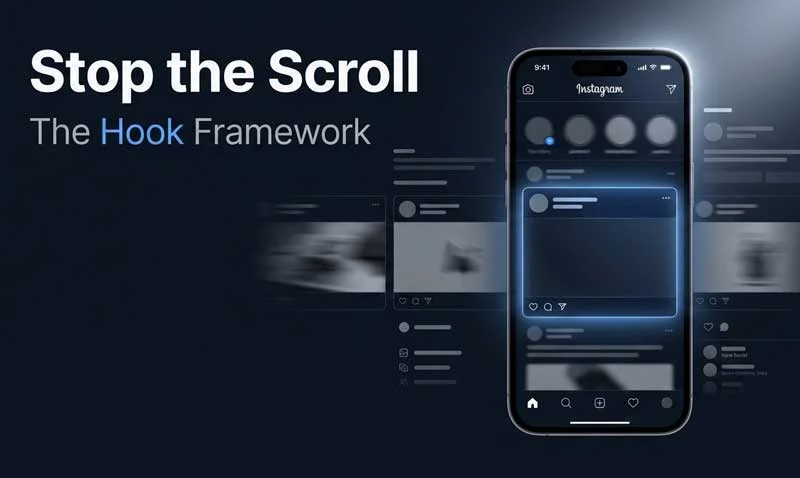
A hook is the opening moment of your content that makes someone stop scrolling.
It’s not just a sentence—it’s a trigger.
A strong hook creates:
- Curiosity
- Relevance
- Immediate interest
It tells the viewer, “This is worth your time.”
Without that signal, your content gets skipped before it even begins.
Why Most Content Fails
Most creators focus on the body of the content—the explanation, the value, the message.
But they ignore the entry point.
Common mistakes include:
- Starting too slowly
- Giving context before capturing attention
- Using generic or predictable openings
By the time the value arrives, the viewer is already gone.
The 3-Part Hook Framework
A simple structure can dramatically improve how your content performs.
1. Pattern Break
The first step is to interrupt the scroll.
This can be done through:
- A bold statement
- An unexpected idea
- A direct challenge
The goal is to stand out instantly in a crowded feed.
Example:
“Posting every day is not why you’re growing.”
This creates friction—and attention.
2. Curiosity Trigger
Once you have attention, you need to hold it.
Curiosity makes people stay.
This can come from:
- An open loop
- A surprising claim
- A question that needs an answer
Example:
“Most people are doing it completely wrong.”
Now the viewer wants to know why.
3. Clear Value Signal
Finally, you need to show that the content will deliver something useful.
This builds trust and keeps the viewer engaged.
Example:
“Here’s what actually works.”
It reassures the viewer that their time will be worth it.
Putting It Together
A strong hook combines all three elements:
Pattern Break → Curiosity → Value
Example:
“You don’t need to go viral to grow your brand.
Most people misunderstand how content actually works.
Here’s the system that changes everything.”
Simple. Direct. Effective.
Why This Framework Works
This structure works because it aligns with how people consume content.
- It grabs attention quickly
- It creates a reason to stay
- It promises value upfront
Instead of hoping people watch, you give them a reason to.
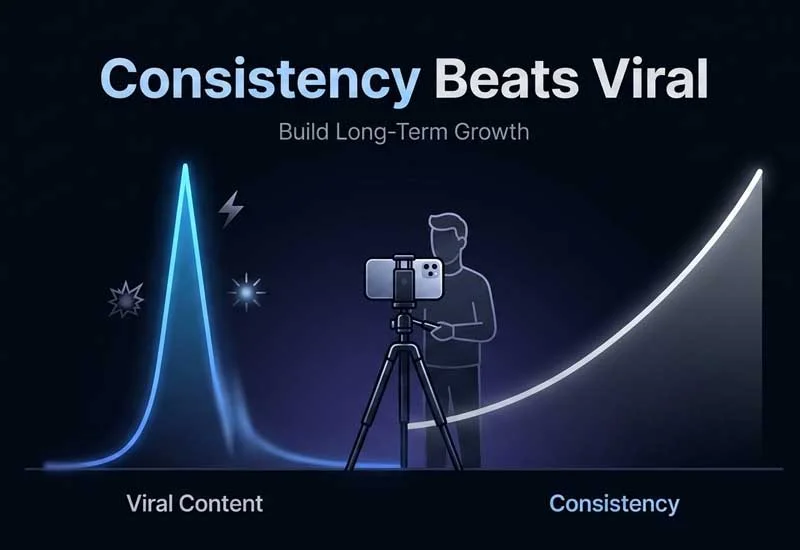
The Real Advantage: Consistency in Quality
A good hook can improve one video.
A repeatable framework improves every video.
When applied consistently:
- Your retention improves
- Your engagement increases
- Your content becomes more predictable in performance
Over time, this creates a noticeable difference in growth.
Turning Hooks Into a System
Knowing how to write a hook is one thing. Doing it consistently is another.
Without structure:
- Ideas become repetitive
- Quality becomes inconsistent
- Performance becomes unpredictable
With a system:
- Hooks are planned in advance
- Content becomes more efficient
- Results become more stable
At that point, creating strong openings is no longer random—it becomes part of your process.
Final Thoughts
In short-form content, the first few seconds decide everything.
You don’t need more content.
You need better entry points.
A strong hook doesn’t just stop the scroll—it earns attention.
And once you have attention, everything else becomes easier.
🔹 FAQ
How long should a hook be?
Ideally within the first 1–3 seconds or the first sentence of your content.
Can I use the same type of hook every time?
It’s better to vary your approach while following the same framework.
Do hooks matter for all platforms?
Yes, especially for short-form platforms like TikTok, Reels, and Shorts.
What if my content is valuable but still not performing?
Weak hooks are often the reason strong content gets ignored.
How can I improve my hooks quickly?
Study high-performing content and practice rewriting your openings using this framework.